Looking for African cornrow braids hairstyles that are stylish, meaningful, and protective? If yes, then this guide is for you. These timeless braiding styles blend deep cultural heritage with contemporary creativity.
From tribal patterns to refined feed-in styles, cornrows are among today’s most versatile protective hairstyles. If you’re new to this style, you may also want to explore our complete guide to cornrow braids to understand techniques, maintenance, and styling variations.
African cornrow braids are loved for their neat scalp braiding, low-maintenance routine, and ability to protect natural hair. Whether you like bold patterns, minimal straight-back braids, or accessorized festival looks, this guide covers everything you need to know. Continue reading!
Cultural Significance of African Cornrows
African cornrows are more than just a hairstyle — they are a powerful symbol of identity, heritage, and artistry.
Historically worn across various African communities, cornrow patterns represented tribe, age, marital status, wealth, and social ranking. Intricate designs often carried messages and cultural pride passed down through generations.
Today, African cornrow braids hairstyles continue to honor that legacy while evolving into modern protective styles. Wearing cornrows celebrates tradition while adopting creativity and individuality in modern fashion.
African Cornrow Style Ideas
Below are 20 stunning African cornrow braid hairstyles to inspire your next protective style. Each idea blends culture, style, and practicality.
1. Fulani Cornrows
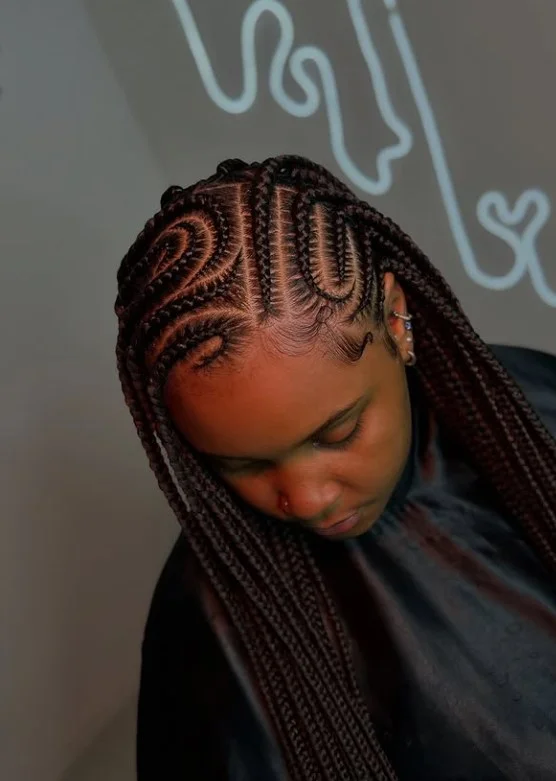
Fulani-inspired cornrows feature a center braid, side braids, and beads for cultural elegance. This iconic look is both traditional and trendy.
Pro Tip: Add lightweight beads for authenticity without adding tension.
2. Tribal Pattern Cornrows
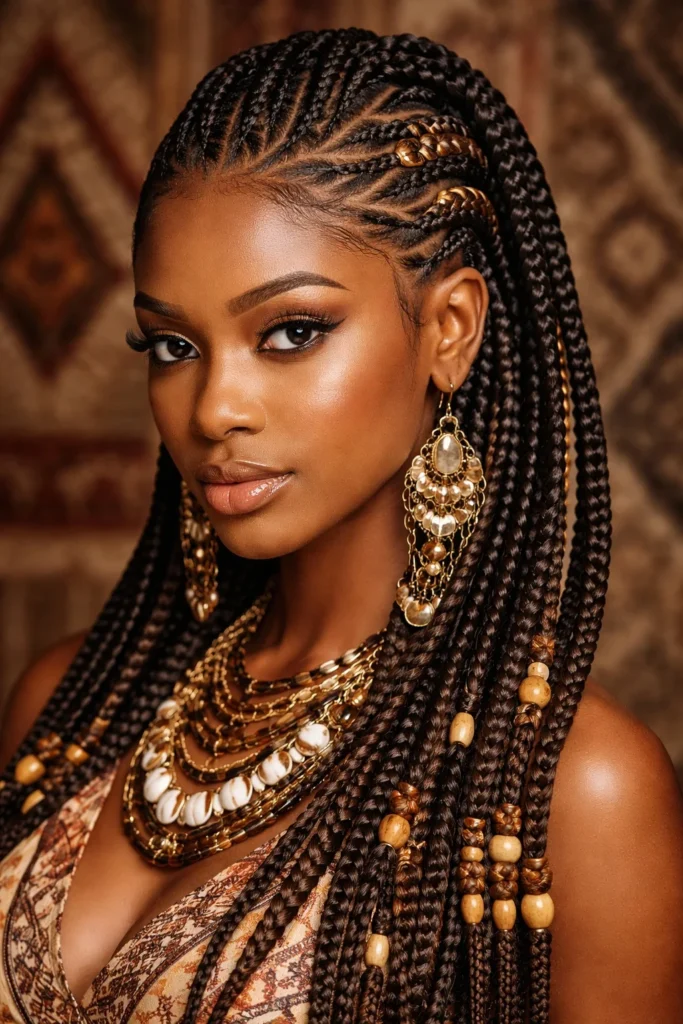
Intricate tribal designs create artistic scalp patterns full of personality. These braids beautifully highlight heritage and craftsmanship.
Pro Tip: Choose a skilled stylist experienced in detailed parting.
3. Beaded African Cornrows
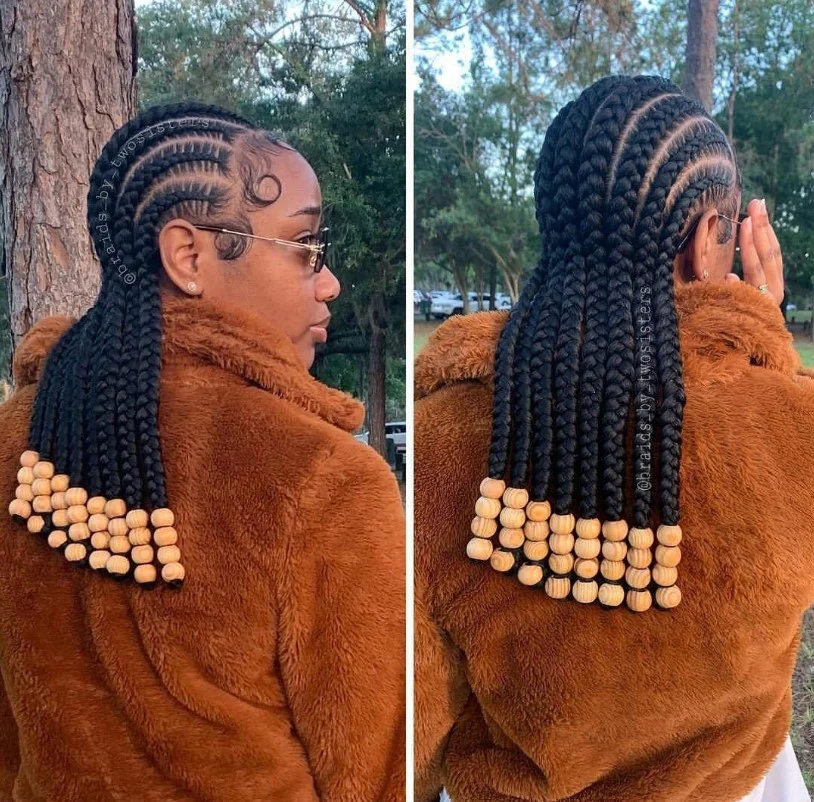
Beads enhance African cornrow braids hairstyles with movement and cultural flair. They’re perfect for festivals and everyday expression.
Pro Tip: Secure beads properly to prevent slipping.
4. Straight Back African Cornrows
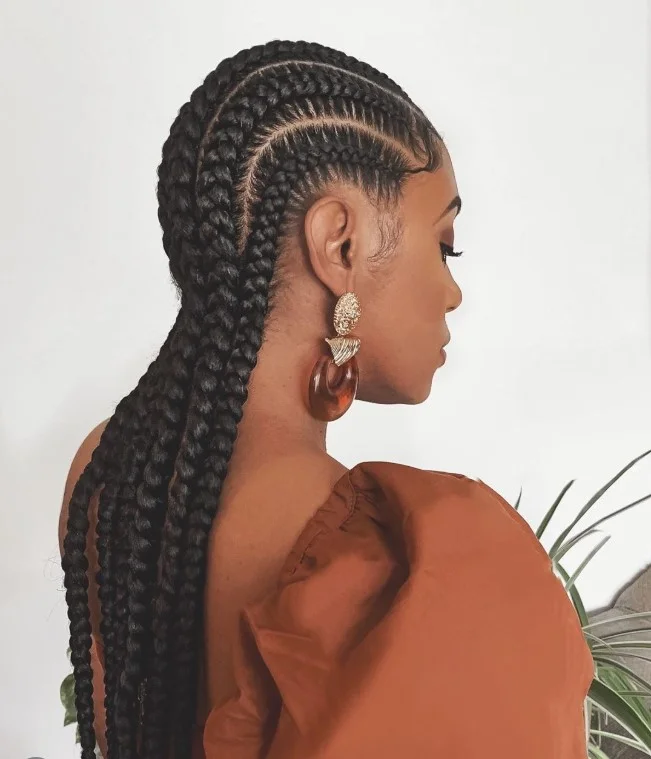
Classic straight-back cornrows are sleek, structured, and timeless. This protective style suits all ages and genders.
Pro Tip: Keep braids evenly spaced for a clean finish.
5. Curved African Cornrows
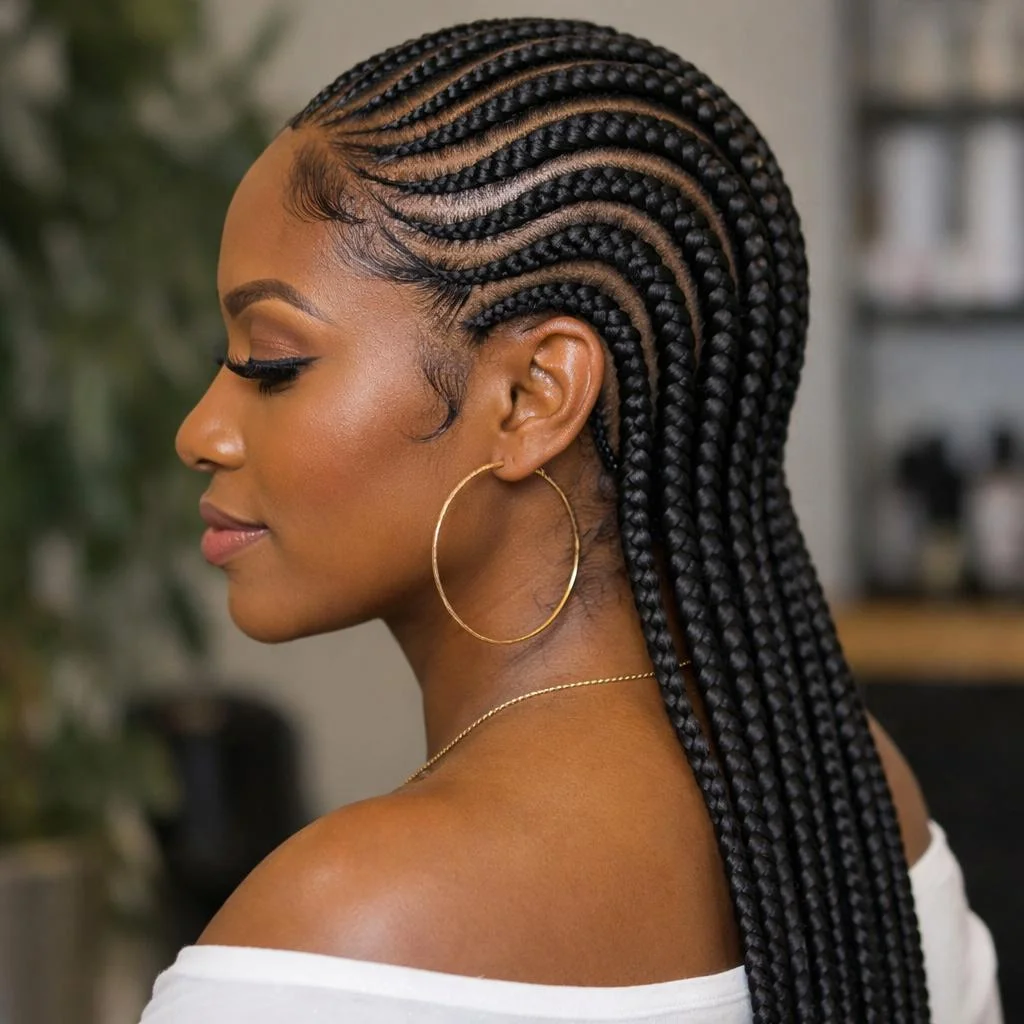
Curved braiding patterns add flow and dimension to traditional cornrows. They create visual softness while maintaining structure.
Pro Tip: Balance curves symmetrically for polished results.
6. African Cornrows with Color
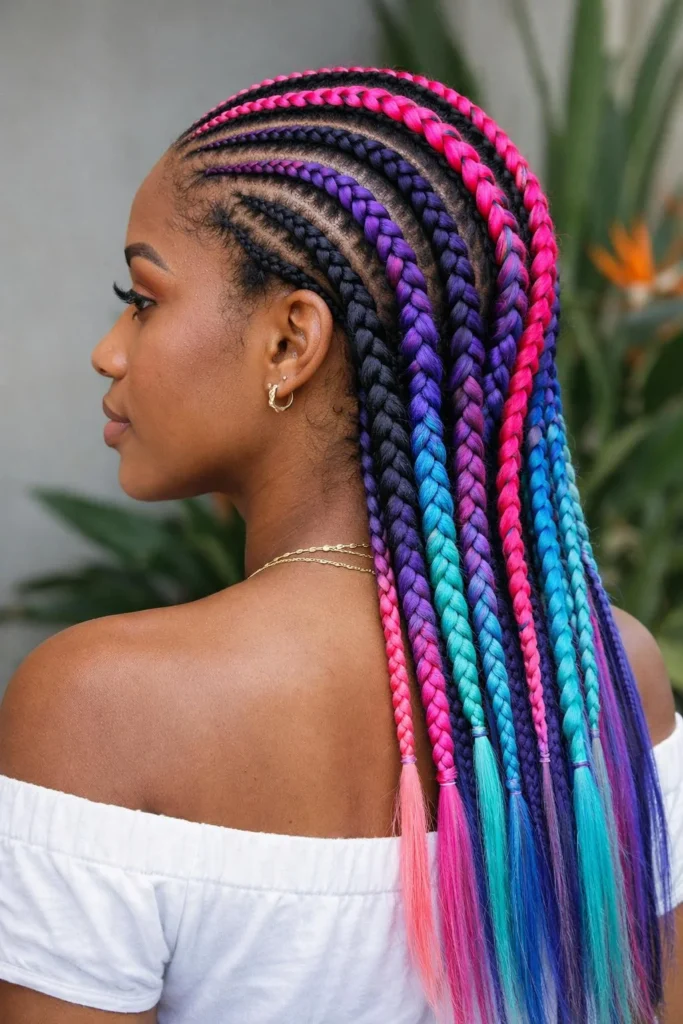
Adding subtle blonde, burgundy, or copper extensions modernizes traditional cornrows. Color brings depth and vibrancy.
Pro Tip: Use pre-colored braiding hair to minimize chemical damage.
7. African Cornrows with Extensions
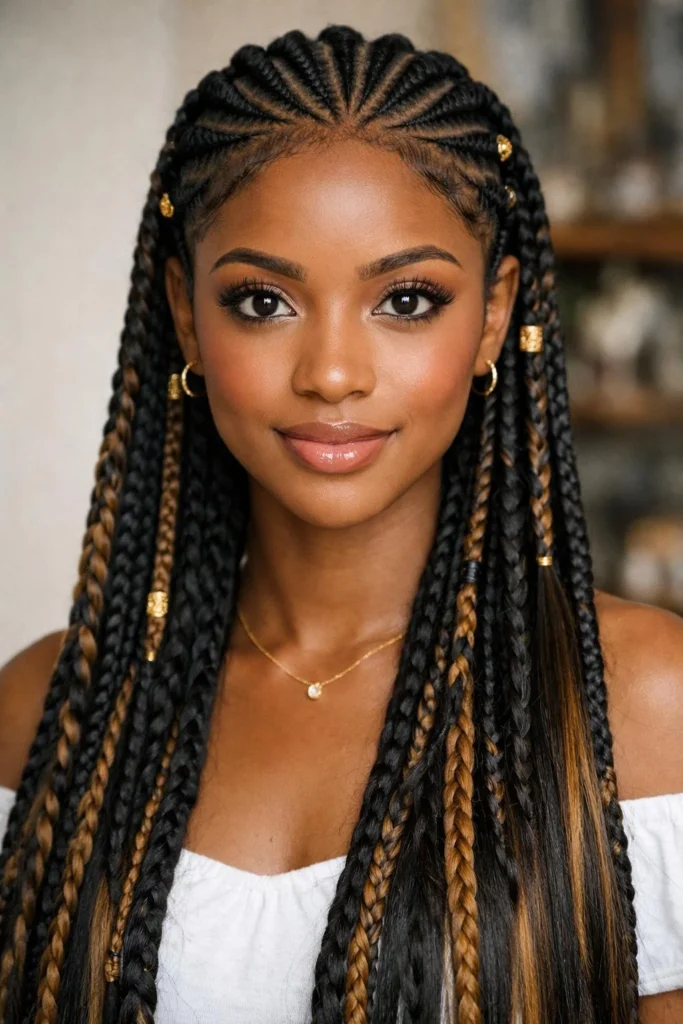
Extensions add length and fullness while protecting natural hair. This option allows versatile styling choices.
Pro Tip: Opt for lightweight extensions to reduce scalp strain.
8. African Cornrow Ponytail
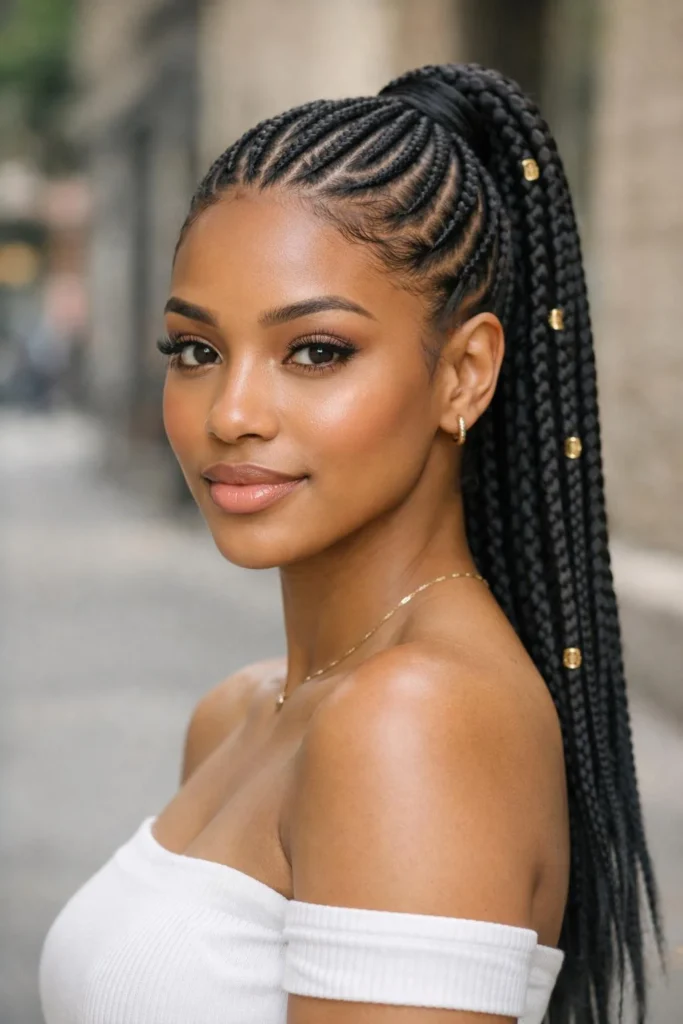
Cornrows styled into a high or low ponytail look sporty yet elegant. It blends practicality with style.
Pro Tip: Wrap a small braid around the base for a seamless look.
9. African Cornrow Bun
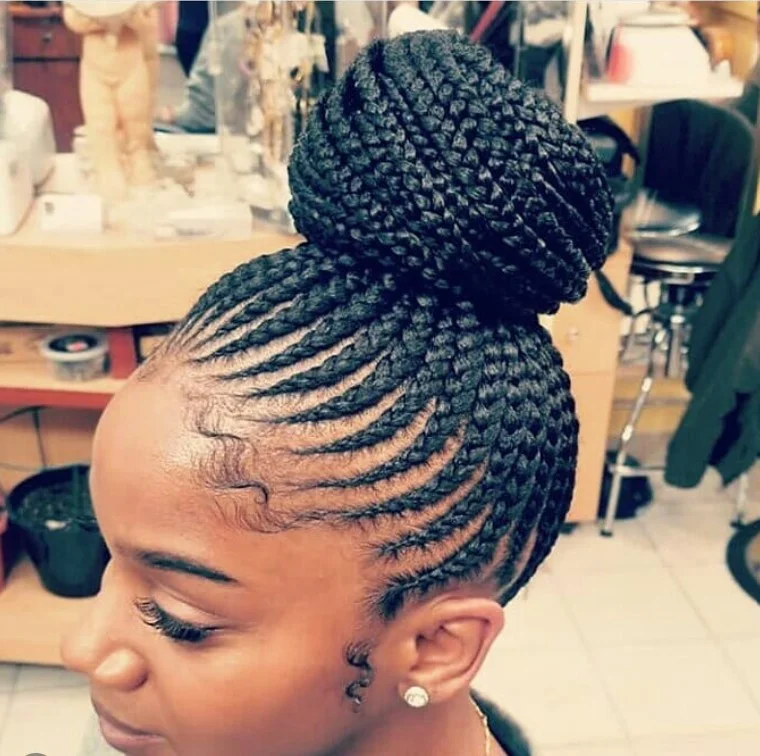
Gathering cornrows into a bun creates a refined and formal protective hairstyle. Ideal for events and weddings.
Pro Tip: Use decorative pins for an elevated finish.
10. Thick African Cornrows
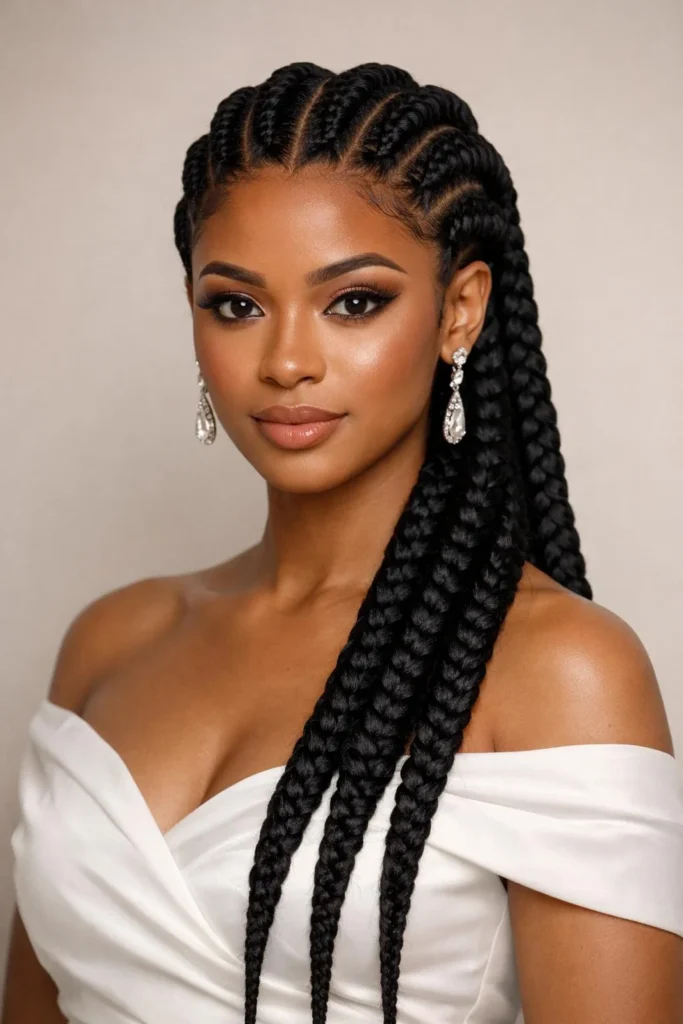
Thicker braids create bold definition and quicker installation time. They make a confident style statement and are often seen in traditional Ghana braids, where feed-in techniques create raised, fuller braid effects.
Pro Tip: Avoid tight braiding to protect edges.
Related: Cornrows with Box Braids Hairstyles: 20 Stunning Hybrid Braid Ideas
11. Thin African Cornrows
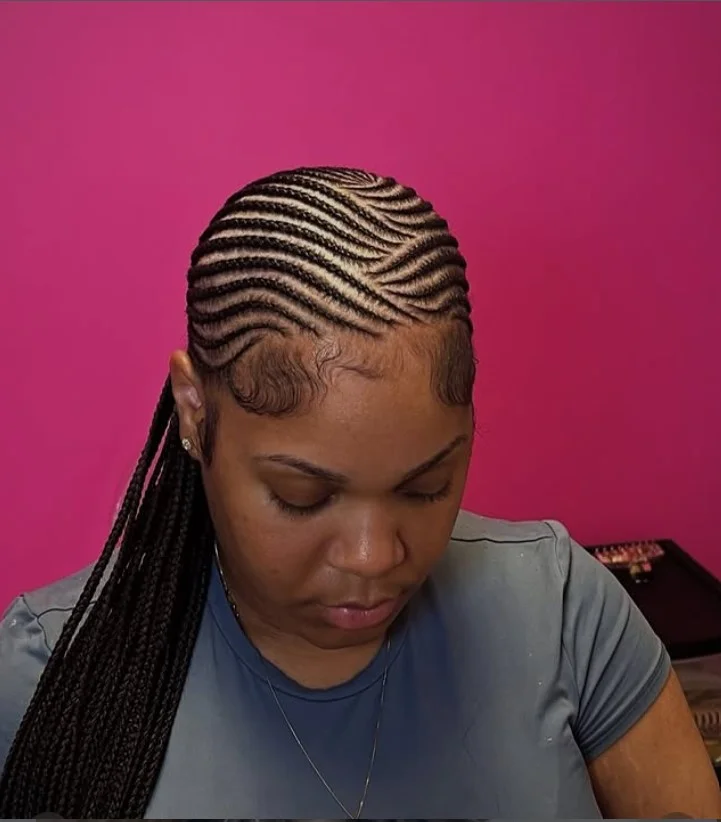
Thin cornrows offer intricate detailing and long-lasting neatness. They’re perfect for elaborate patterns.
Pro Tip: Maintain scalp hydration to prevent dryness.
12. African Cornrows with Accessories
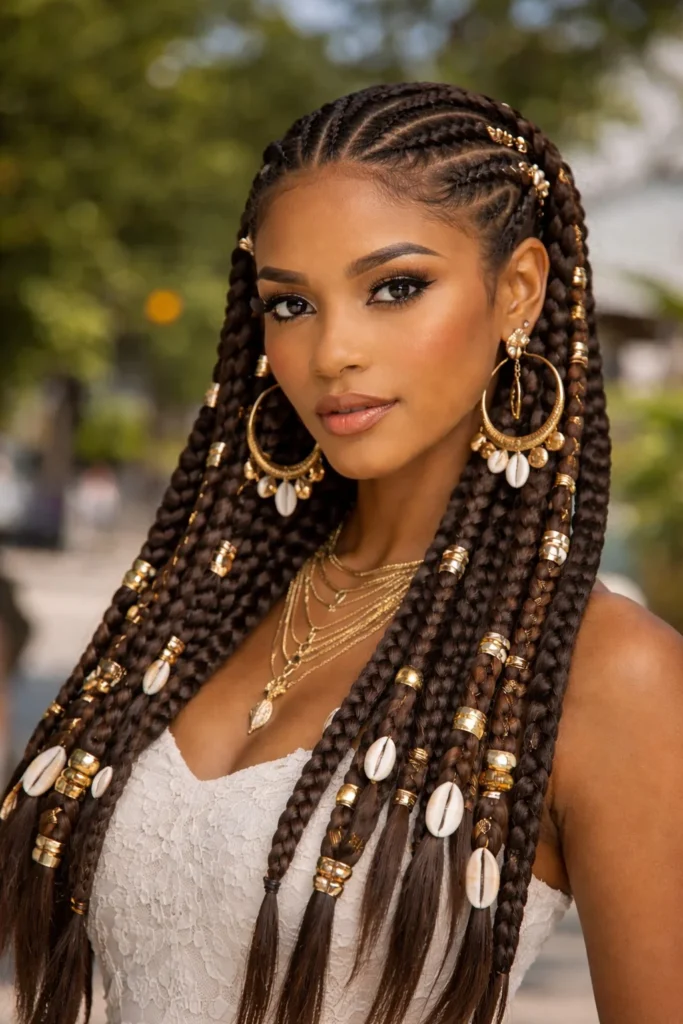
Hair cuffs, rings, and metallic accents add modern flair to cornrows. Accessories enhance visual appeal instantly.
Pro Tip: Place accessories evenly for balanced styling.
13. African Cornrows for Natural Hair
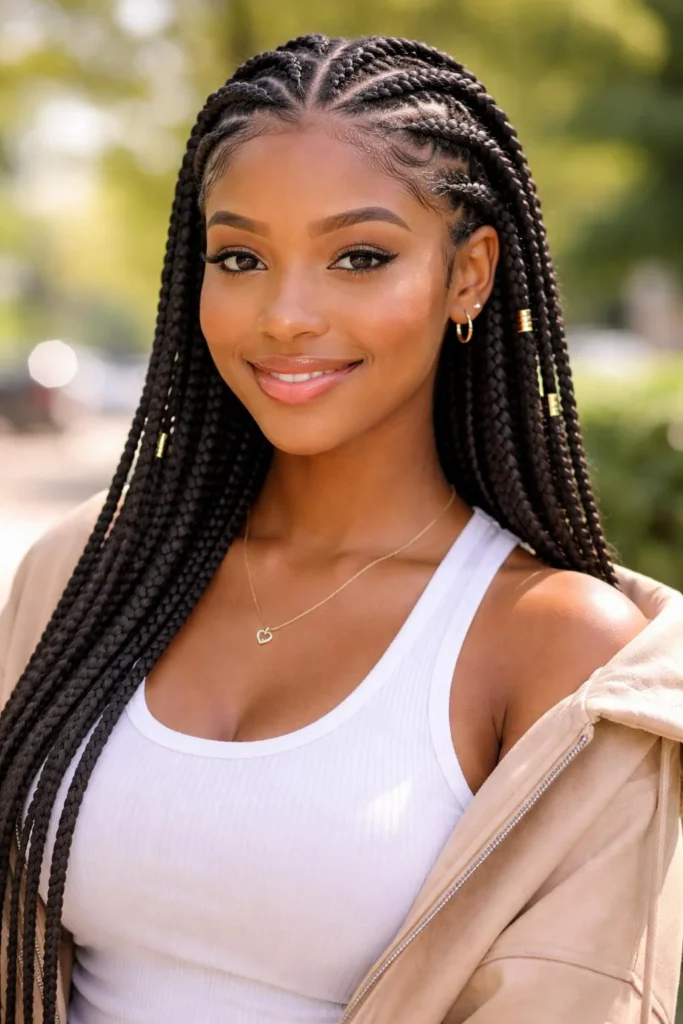
These protective braids minimize manipulation and help retain hair length. They support healthy, natural hair growth.
Pro Tip: Moisturize before braiding to lock in hydration.
14. African Cornrows with Curls
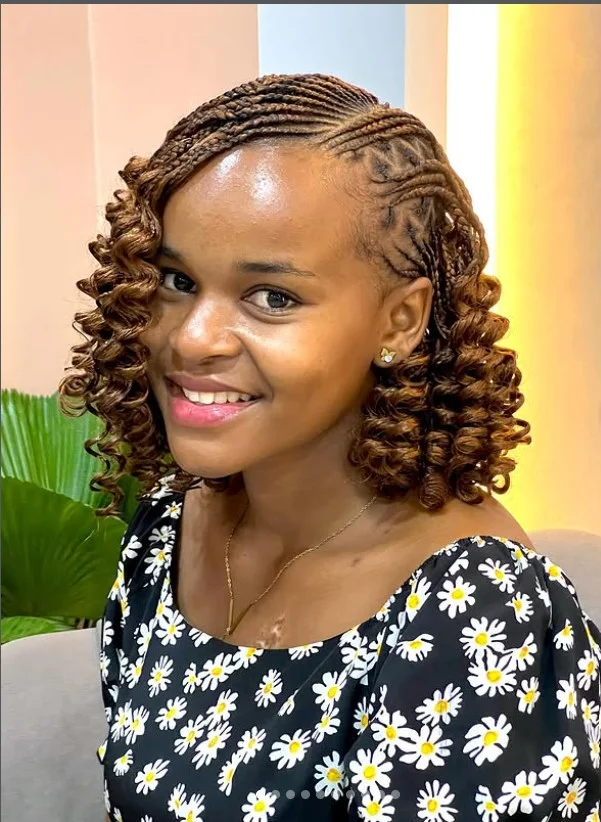
Curly ends soften the structured braid base. This look blends bold and romantic aesthetics.
Pro Tip: Use curl mousse to maintain definition.
15. Modern African Cornrow Mix
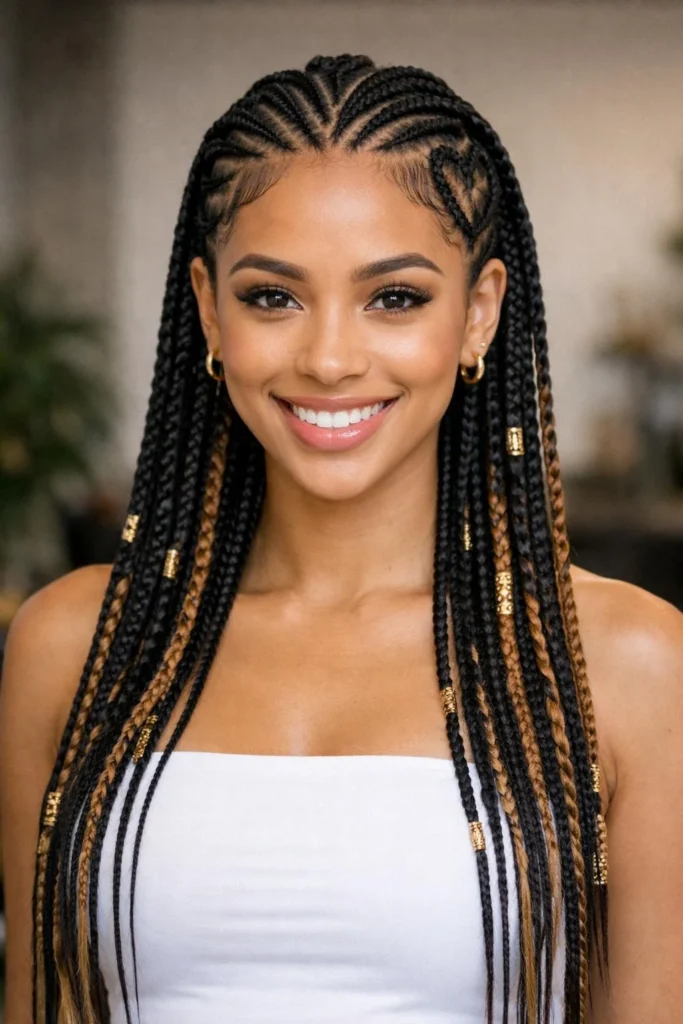
Combining cornrows with box braids or twists creates hybrid styles full of texture. It’s a modern twist on tradition.
Pro Tip: Keep braid sizes consistent for harmony.
16. Traditional Village Pattern Cornrows
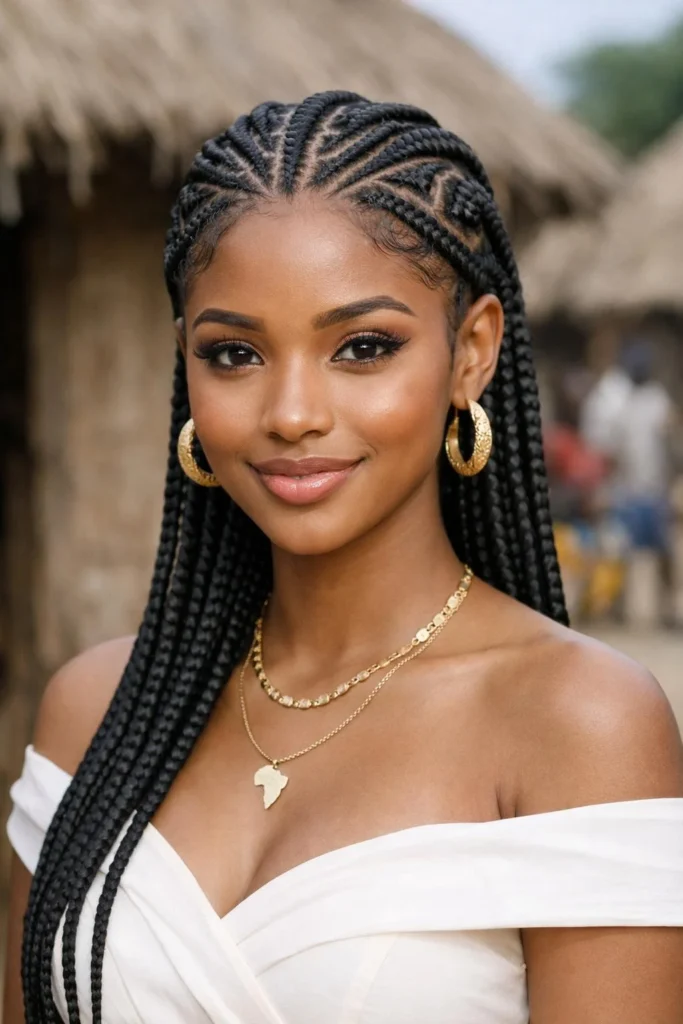
Authentic village-inspired patterns honor deep African roots. They reflect history and cultural pride.
Pro Tip: Research pattern meanings for cultural appreciation.
17. African Cornrows with Side Part
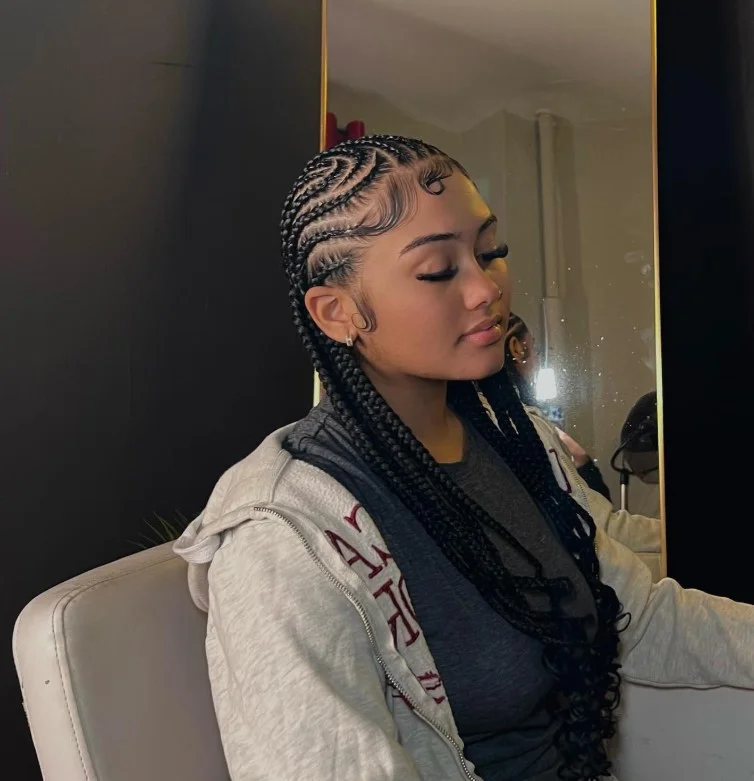
A deep side part modernizes classic straight-back cornrows. It frames the face beautifully.
Pro Tip: Keep edges sleek for clean definition.
18. Festival African Cornrows
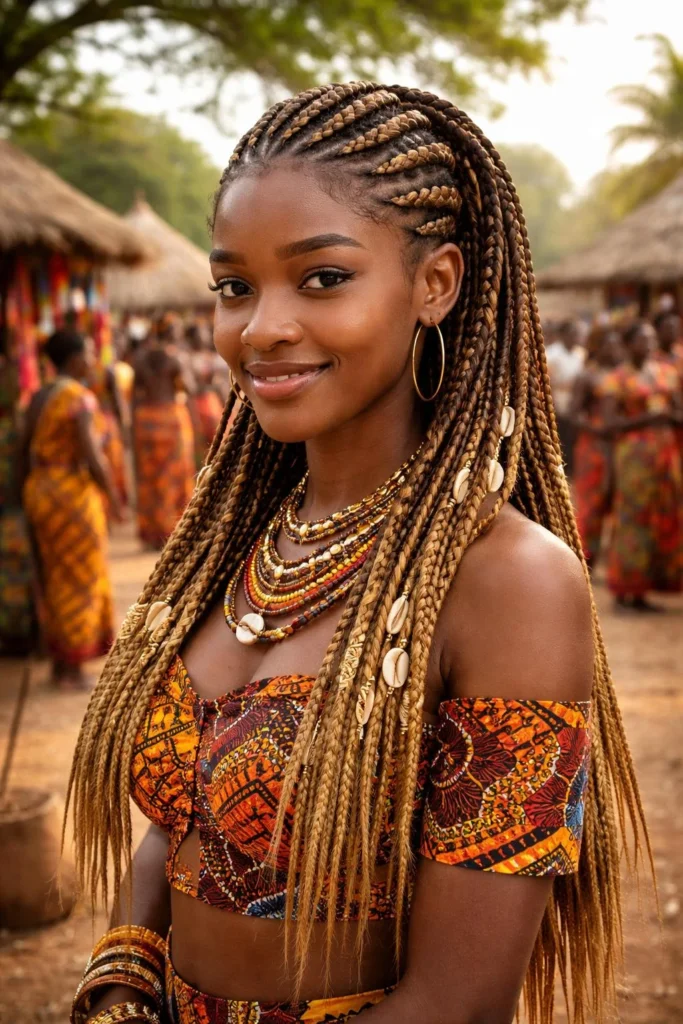
Bold parting and vibrant colors make these braids stand out at events. They’re expressive and creative.
Pro Tip: Choose lightweight decorative elements.
19. Minimal African Cornrows
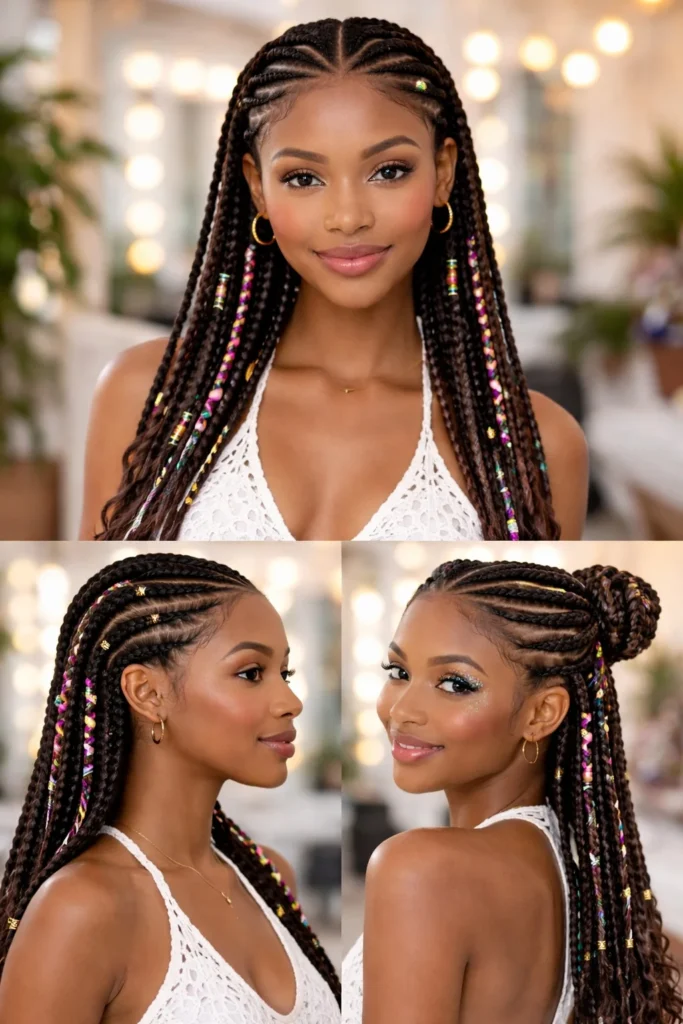
Clean lines and simple spacing create a neat everyday look. Minimal styles are timeless and low maintenance.
Pro Tip: Refresh scalp weekly with light oil.
20. Trending African Cornrow Braids Hairstyles of 2026
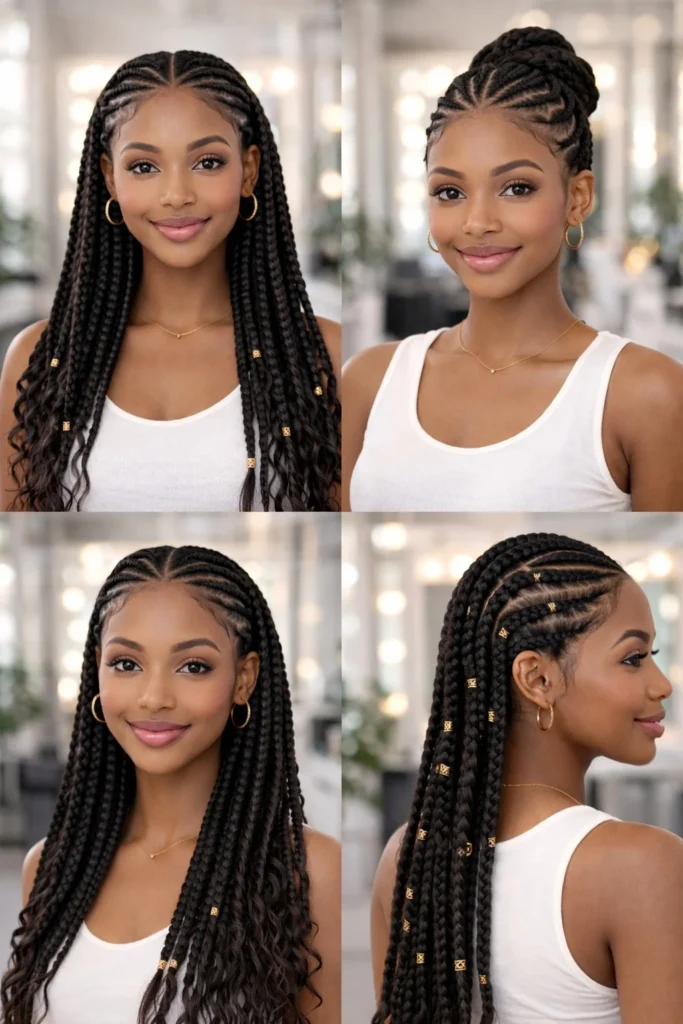
This year’s trends include sleek feed-in techniques, creative parting designs, and subtle color blends. African cornrows continue evolving while honoring tradition.
Pro Tip: Choose a design that fits your lifestyle and comfort level.
Related: Ghana Braids Cornrow Hairstyles: — 20 Stylish Haircut Ideas You’ll Love
How to Choose the Best African Cornrow Braids Hairstyles for Your Face Shape
| Face Shape | Best African Cornrow Braids Hairstyles | Avoid |
|---|---|---|
| Oval | Most styles, including straight-back & ponytail | Overly tight edges |
| Round | High ponytail cornrows, side-part styles | Flat styles with no height |
| Square | Curved or tribal patterns | Harsh straight parting |
| Heart | Low bun or soft curled ends | Excessive top volume |
| Long | Thick cornrows or buns | Very high ponytails |
Choosing the right African cornrow braids hairstyle enhances facial balance and comfort.
Styling and Maintenance Tips for African Cornrow Braids Hairstyles
Proper care keeps your cornrows neat and long-lasting:
- Moisturize scalp 2–3 times weekly with lightweight oil.
- Sleep with a satin scarf or bonnet.
- Avoid excessive tension on edges.
- Clean scalp gently using diluted shampoo.
- Re-do edges if needed after 2–3 weeks.
With consistent care, your protective braids can stay fresh for weeks.
The Bottom Line
African cornrow braids hairstyles are a beautiful blend of culture, protection, and modern creativity. They offer endless versatility, whether you prefer minimalist straight backs or bold tribal patterns.
These protective cornrow braids support natural hair health while allowing artistic self-expression. With the right maintenance and styling choices, they remain one of the most timeless and powerful hairstyles worldwide.
Ready to choose your next look? Let your cornrows tell your story.
FAQs
How long do African cornrow braids last?
African cornrow braids typically last 2 to 4 weeks, depending on your hair type, scalp care routine, and how tightly they were installed. Proper maintenance, like moisturizing the scalp, sleeping with a satin scarf, and avoiding excessive pulling, can help your protective cornrows stay neat and fresh longer.
Are African cornrow braids good for natural hair growth?
Yes, African cornrow braids are considered a protective style that helps reduce daily manipulation and breakage. When installed correctly and not braided too tightly, cornrows can help retain length and promote healthier natural hair over time.
What is the difference between African cornrows and regular cornrows?
African cornrow braids often feature cultural patterns, tribal designs, beads, and intricate partings, while basic cornrows are typically straight-back and simpler. The African styles emphasize heritage, creativity, and scalp artistry, making them both meaningful and visually striking.